


Eyo Festival
(Àtúnjúwe láti Ẹ̀yọ̀)

Eyo Festival jẹ́ òrìṣà ayẹyẹ tí a mọ̀ mọ́ Erékùsù Èkó ní ìpínlẹ̀ Èkó lórílẹ̀ èdè Nàìjíríà. Ó jẹ́ òrìṣà tí àwọn ẹgbẹ́ awo máa ń fi ń ṣẹ̀yẹ ìkẹyìn fún olóyè pàtàkì tàbí ọba tí ó bá wàjà ní Èkó.[1] Nígbà mìíràn ẹ̀wẹ̀, wọn a máa gbé Ẹ̀yọ̀ jáde fún àwọn ayẹyẹ pàtàkì mìíràn ní Erékùṣù Èkó.[2]. Ọdọọdún ni wọ́n máa ń ṣodún Ẹ̀yọ̀ ni Erékùṣù Èkó.
Àwòrán
[àtúnṣe | àtúnṣe àmìọ̀rọ̀]-
 Bridge pillars in Lagos showing Eyo figures
 -
 Eyo figure advertising upcoming festival
 -
 Members of the Eyo Iga Etti procession at the Eyo festival at Tafawa Balewa Square in Lagos, including a man carrying a burning pot on his head.
 -
 The banner of the Eyo Iga Taiwo Olowo entering the TBS.
 -
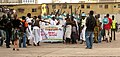 The banner of the Eyo Iga Opeluwa entering the TBS.
 -
 The banner of the Eyo Awise entering the TBS.
 -
 Masquerades in the Eyo Iga Etti procession.
 -
 Eyo Olokun masquerades at the TBS. Eyo Olokun are connected with Olokun, the Yoruba deity of the sea.
 -
 Children in costume at the festival.
 -
 Masquerades of the Eyo Iga Sasi entering the TBS in Lagos in procession.
 -
 A man carrying a burning pot on his head as part of a procession in a residential area of Lagos. Probably a member of Eyo Iga Etti.
 -
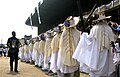 Masquerades of the Eyo Iga Faji parading in the TBS.
 -
 A performer on stilts as part of the Eyo Agere Molokun procession parading in the TBS.
 -
 A packed lunch brought by the royal family for the 2011 Eyo festival, commemorating Prince Yesufu Abiodun Oniru.
 -
 A bus with Eyo masquerades painted on the back, with the slogan "Eko o ni baje" (literally Lagos will not spoil, a colloquialism for Lagos will prevail).


Àwọn Ìtọ́kasí
[àtúnṣe | àtúnṣe àmìọ̀rọ̀]- ↑ "EYO FESTIVAL". Ochulo. 2018-05-15. Retrieved 2020-01-24.[Ìjápọ̀ tí kò ṣiṣẹ́ mọ́]
- ↑ "Eyo festival: History and features - Vanguard News". Vanguard News. 2017-06-02. Retrieved 2020-01-24.